How much does it cost to rent in Luxembourg in 2026? Average rent by apartment type and area
~11 min read·14 September 2026·Last reviewed 14 September 2026
Luxembourg is expensive. There's no useful way to soften that, and any guide that tries is wasting your time. It has one of the highest costs of living in Europe, a housing shortage that has outpaced construction for two decades, and a rental market where listings routinely attract fifteen to twenty applicants within forty-eight hours.
What's more useful than reassurance is precision: what does it actually cost, where does the money go, and where are the real levers.
This guide breaks down current rent ranges by apartment type and by area, explains why the numbers look the way they do, sets out what's typically included in a Luxembourg rent figure (less than you'd think), and covers the practical ways people reduce what they pay — some of which are more effective than they sound, and one of which most newcomers overlook entirely.
A note on the figures
Rental data in Luxembourg varies significantly between sources depending on methodology and sample. Everything below is presented as a range reflecting general market consensus, not a quote and not a single authoritative average. Treat them as orientation for budgeting, then check live listings for reality.
The short version
National average: roughly €1,600–1,800 per month, or about €28–31 per m².
Studios: roughly €850–1,800, depending heavily on location.
One-bedroom: roughly €1,700–2,800, with Luxembourg City typically €1,950–2,300.
Two-bedroom: roughly €1,600–6,900, the widest range of all — and the one where your choice of area matters most.
Furnished costs roughly 15–30% more than unfurnished, though that comparison is misleading until you account for what each includes.
Rents are expected to rise 3–5% during 2026.
Average rent by apartment type
Type
Typical range
In the city
Notes
Studio
€850–1,800
Upper half of the range
The €850 end means outlying communes, not the capital. Central studios rarely go below the mid-range.
1-bedroom
€1,700–2,800
€1,950–2,300 typical
The most competitive segment — highest demand, fastest turnover.
2-bedroom
€1,600–6,900
€1,800–6,900
By far the widest range — driven almost entirely by area. The top end is Belair and Hollerich; see the next section.
A few things this table doesn't show but you should know.
The bottom of each range is geographic, not a bargain. A €850 studio isn't a well-priced central studio; it's a studio somewhere else. Read the low figures as "what's achievable if you broaden your search area", not "what to hold out for in Belair".
The two-bedroom spread is the story. Between Bonnevoie at €1,800 and Belair at €6,900 there is roughly €5,100 a month — several times the entire rent of a cheaper apartment. No other decision you make will move your housing cost as much as which area you choose.
Per-square-metre pricing cuts across all of this. At €28–31/m², a generously sized apartment in a cheaper commune can cost the same as a cramped one in the centre. If space matters to you, the per-m² figure is often a better comparison tool than the headline rent.
Rent by area: Luxembourg City and the Greater Region
Two-bedroom monthly ranges, for orientation, ordered from the highest down. These match the figures in our guide to the best neighbourhoods to rent in Luxembourg, which covers what each area is actually like to live in.
Area
2BR range
Why
Belair
€5,850–6,900
Quiet, green, family-oriented, very low turnover
Hollerich
€5,850
In transition — former industrial area with newly built and converted stock
Limpertsberg
€3,000–3,500
Walkable to the centre, established international community, French lycées
Kirchberg
€2,800–3,200
EU institutions, modern build quality, walk-to-work for a large employer base
Gasperich
€2,200–2,800
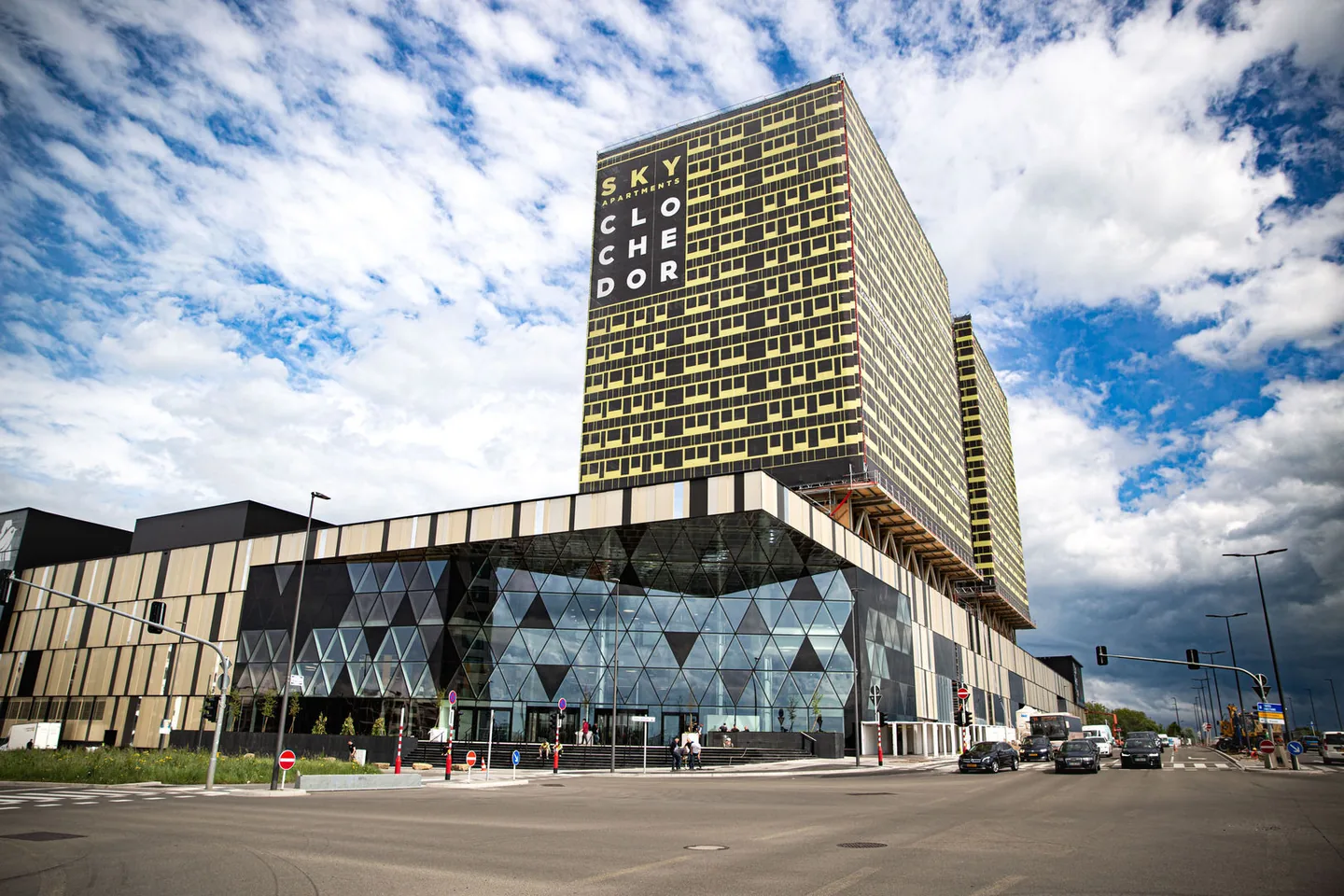
New build, Cloche d'Or business district proximity
Bonnevoie
€1,800–2,500
15–20% below the city average, young and multicultural
Gare
€1,800–2,500
Station access, dense and urban
Beyond the capital — the Greater Luxembourg Region
This is where the largest savings sit, and where most people looking at Luxembourg City rents never think to look.
Esch-sur-Alzette, Differdange, Dudelange and the northern communes all price meaningfully below the capital. The exact gap varies by town and by property, so the honest instruction is this: run the same search in two or three of these towns and compare directly. The difference is usually obvious within ten minutes of browsing.
What makes this worth doing rather than dismissing: public transport across Luxembourg has been free since 2020. Buses, trams and trains, nationwide, at no cost. The financial argument for paying a capital-city premium to shorten your commute simply doesn't exist any more. Commute time still counts — Esch is not Kirchberg — but the running cost of living further out is zero, which changes the arithmetic for a lot of people.
Why Luxembourg rent is so high
Brief context, because it explains why waiting for prices to fall is a poor strategy.
Supply hasn't kept pace with population. Luxembourg's population has grown rapidly for two decades, driven by international employment. Construction has not matched it. The result is structural scarcity rather than a cyclical squeeze.
The employer base is unusually concentrated and unusually well-paid. EU institutions, the European Court of Justice, a large financial sector and a growing professional services cluster all hire internationally, and those employees arrive needing housing on a schedule. That produces sustained demand at the upper end that doesn't soften much when conditions change.
Vacancy is extremely tight. Under 3% in high-demand areas. In practice this is what produces the fifteen-to-twenty-applicants-in-48-hours dynamic — it isn't a marketing exaggeration, it's what a sub-3% vacancy rate looks like from the tenant's side.
The country is small. There's limited land, and the commutable area extends across three borders, which brings cross-border workers into competition for the same housing near transport links.
The practical takeaway: this is a seller's market and has been for a long time. Plan around it rather than hoping to outlast it.
What's included in the rent, and what isn't
This is where budgets go wrong, because the advertised figure in Luxembourg usually isn't the figure you pay.
On a traditional lease, typically not included:
Utilities — electricity, water, heating, arranged and billed in your name.
Building and service charges (charges) — commonly billed as a monthly advance with an annual reconciliation, which means a settlement bill arriving months later.
Internet — your own contract, your own installation.
Parking — frequently a separate monthly charge, particularly in the city.
Together, utilities and service charges commonly add €200–300 per month on top of the headline rent. That's a meaningful distortion when comparing listings, and it's not always disclosed the same way by every landlord.
Sometimes included, worth checking explicitly: building maintenance, water in some buildings, and a cellar or storage space.
The all-inclusive alternative works differently. On LuxFlat Direct, every listing's monthly price covers electricity, water, heating, building and service charges, Wi-Fi and furniture — one figure, no separate contracts to open or close. For a shorter stay that matters more than it first appears, since setting up and closing utility accounts for a few months carries its own fees and delays. Full breakdown, including the one-time fees on each side: how rental costs work on LuxFlat Direct.
When you're comparing two listings, the only fair comparison is total monthly outlay. A €1,900 unfurnished listing and a €2,200 all-inclusive one are closer than they look.
Where you live moves your housing cost more than any other decision you make.
How to reduce what you pay
Five levers, roughly in order of how much they move the number.
1
Broaden your search area.
The single largest saving available, and the most commonly skipped. The capital-versus-Greater-Region gap dwarfs anything you'll achieve by negotiating. With free national transport, the ongoing cost of living further out is zero.
2
Compare total monthly cost, not rent.
Two to three hundred euros a month sits in the gap between an advertised rent and an all-inclusive one. People routinely choose the "cheaper" apartment and pay more.
3
Consider a room rather than a whole apartment.
Rooms in shared accommodation start considerably below any self-contained unit — in Bonnevoie, from around €620–800 per month. For someone arriving alone on a fixed-term contract, this is often the difference between a comfortable budget and a stretched one, and it solves the social problem at the same time.
4
Match the furnishing to your stay length.
Furnished costs 15–30% more per month, but if you're staying under a year, buying furniture and setting up utilities for a place you're leaving costs more than the premium.
5
Be ready to move fast.
In a market with fifteen to twenty applicants per listing, the applicant who can respond immediately with complete documents has a real advantage over one who's still assembling payslips. On LuxFlat Direct that's a single verification — ID and proof of income, reviewed within 24 hours — after which you can send requests to any listing without reassembling paperwork.
Rents are expected to rise 3–5% this year. On a €2,000 apartment that's €60–100 more per month by year end.
Two implications worth planning around. If you're arriving later in 2026, budget against the top of the ranges in this article rather than the middle. And if you're weighing a longer commitment against a flexible one, the rising trend slightly favours locking in — though not enough to justify signing a three-year lease you're not confident about, given that breaking one costs more than a year of rent increases.
The tight-vacancy dynamic shows no sign of loosening. Plan for competition, prepare your documents in advance, and decide your area before you start browsing rather than after.
Frequently asked questions
The national average sits at roughly €1,600–1,800 per month, or about €28–31 per square metre. Luxembourg City runs well above that — expect €1,950–2,300 for a one-bedroom and anywhere from €1,800 to €6,900 for a two-bedroom depending on the area. Rents are expected to rise 3–5% during 2026.
Significantly. Premium city areas reach €2,800–3,500 for a two-bedroom, and Belair and Hollerich run from €5,850, while areas such as Bonnevoie and Gare sit closer to €1,800–2,500. Towns in the wider Greater Region — Esch-sur-Alzette, Differdange, Dudelange — are cheaper again. Since public transport has been free nationwide since 2020, commuting from further out costs nothing.
Within Luxembourg City, Bonnevoie is consistently the most affordable, with rents running roughly 15–20% below the city average, and Gare is priced similarly. Outside the capital, the southern towns and northern communes are cheaper still. Renting a room rather than a whole apartment is the cheapest option overall, starting from around €620 per month in Bonnevoie.
Landlords generally want to see that rent is comfortably covered by your net income, and will ask for proof — payslips, or an employment or internship contract if you haven't been paid yet. There is no single official ratio, so the practical test is whether your documents show the rent is sustainable alongside your other commitments.